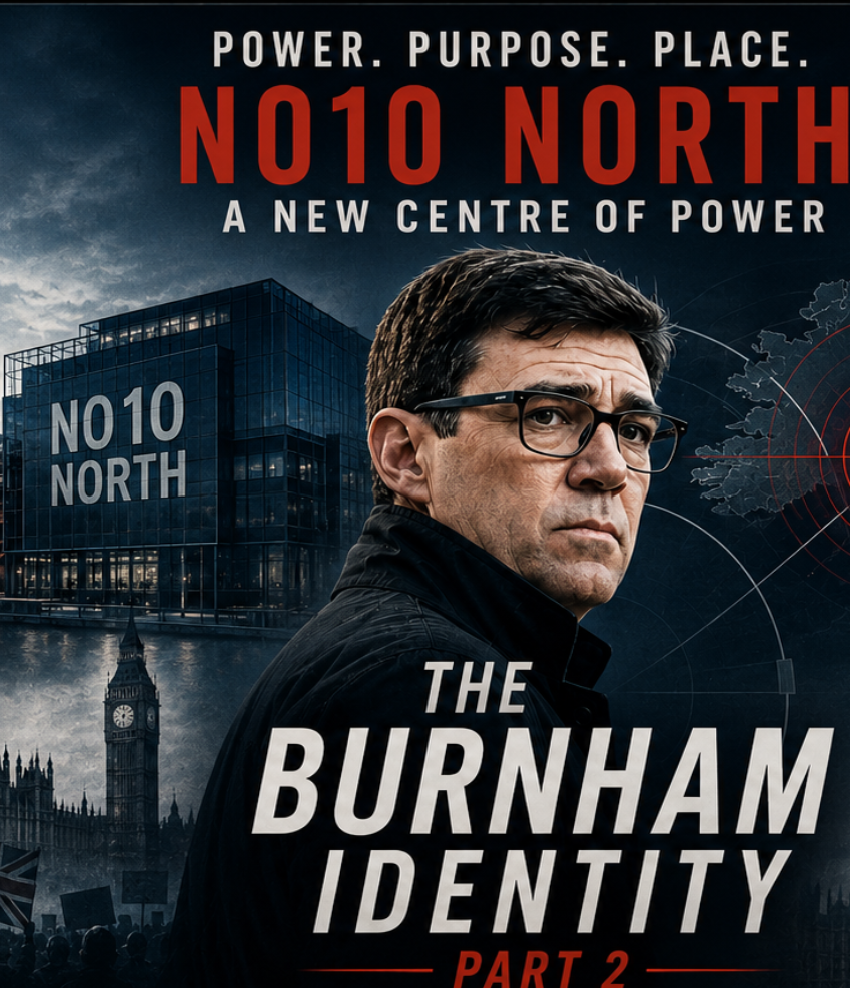
The Burnham Supremacy Begins

A new chapter, a new chase. Still evading those who would pin him down, Andy Burnham has done an admirable job of ducking and diving competing interests to become prime minister on Monday. Even a last minute Chancellor switcheroo can’t stop his momentum. But it does make more enemies in the growing field of those coming for him and his allies. Ed Miliband and his supporters will not take Louise Haigh’s manoeuvring towards Shabana Mahmood lightly. Haigh has consistently capitalised on her political opportunities and never more so than as the only MP involved in the Burnham access talks. But the public nature of the infighting over the Burnham cabinet shows that the new PM will struggle to stick to his initial firm declaration that “the political direction I set is not up for negotiation”.
Markets are less interested in the political direction than the economic one, focusing on the choice of Chancellor. This misses the point of Burnham. Starmer failed, at least in part, over a lack of political acumen. Sales is part of the job. Burnham judges his people-pleasing capabilities can paper over any cracks and deliver the ever more elusive and ill defined “change” promised two years ago. But personality cannot solve economic challenges alone. Whoever occupies No10 (North and South) and No11, they have to wrestle with Britain’s intractable high debt/low growth problem. The IMF, the OECD and the OBR have lined up to explain what has to be done – and it’s not more tax and spend. Burnham told Gary Lineker he “might be having to ask for a little more” suggesting he hasn’t yet got the memo. There will be plenty of those in the red box on Monday. And if he ignores them, gilt yields and sterling will be an almost 24/7 reminder.
Fortunately he can immediately delegate all matters economic to his Chancellor. Hence the forensic scrutiny of anything Shabana Mahmood has ever said. The apparent relief rally that she isn’t Ed Miliband should not be conflated with her having a market-friendly ideology. Mahmood is associated with the Blue Labour tradition, which, although socially conservative, is economically closer to a pro-worker, interventionist form of capitalism than to Blairite free-market liberalism, favouring stronger labour institutions and industrial policy. Neither Mahmood or Miliband would argue that Britain’s economic problems can be solved simply by deregulation, lower taxes and a smaller state. The problem is that markets have already begun to question whether Britain can afford a state that promises more than the economy can deliver.
Make no mistake: the Burnham Supremacy will be socialist. Burnham in his first speech as leader said the party would be “distinctly Labour“. The priorities will be to help the working man and those who are unable to help themselves. The method will be taxing wealth a bit more and borrowing a bit more to spend a bit more. Reeves felt the same. Her 2024 Mais Lecture rejected capitalism entirely, arguing that it killed democracy: “a model based on the pursuit of narrow-based, narrowly-shared growth – with ever-diminishing returns – cannot produce adequate returns in growth and living standards, and nor can it command democratic consent”. Turns out her approach cannot produce those adequate returns either. Burnham/Miliband/Cooper/Mahmood will be greeted by the same brick wall, absent radical reform. And Burnham will not have the very democratic consent that Reeves feared losing, because he hasn’t gained a mandate for any radical reform from the national electorate.
So what can he do? Raise taxes, throw in some giveaways and max out the accounting tricks and interpretation of debt to meet the fiscal rules. There will be both radical changes (social care tax? Defence levy? 50p tax rate?) and a dimunition of ambition. Markets will initially, after some wobbly leaks in the run-up to the first Budget, be placated.
The Burnham Supremacy is at its most powerful right now, with support from across the party and a new Chancellor ready to make a new first impression. But the story of this instalment is the same as that which went before: they’re coming for him. His own MPs, Labour members, voters and markets cannot all be satisfied by vibes alone. To govern is to choose and this government, whoever leads it, cannot choose what needs to be done.