28th April 2026
The End of Starmer – Privileges Committee Vote
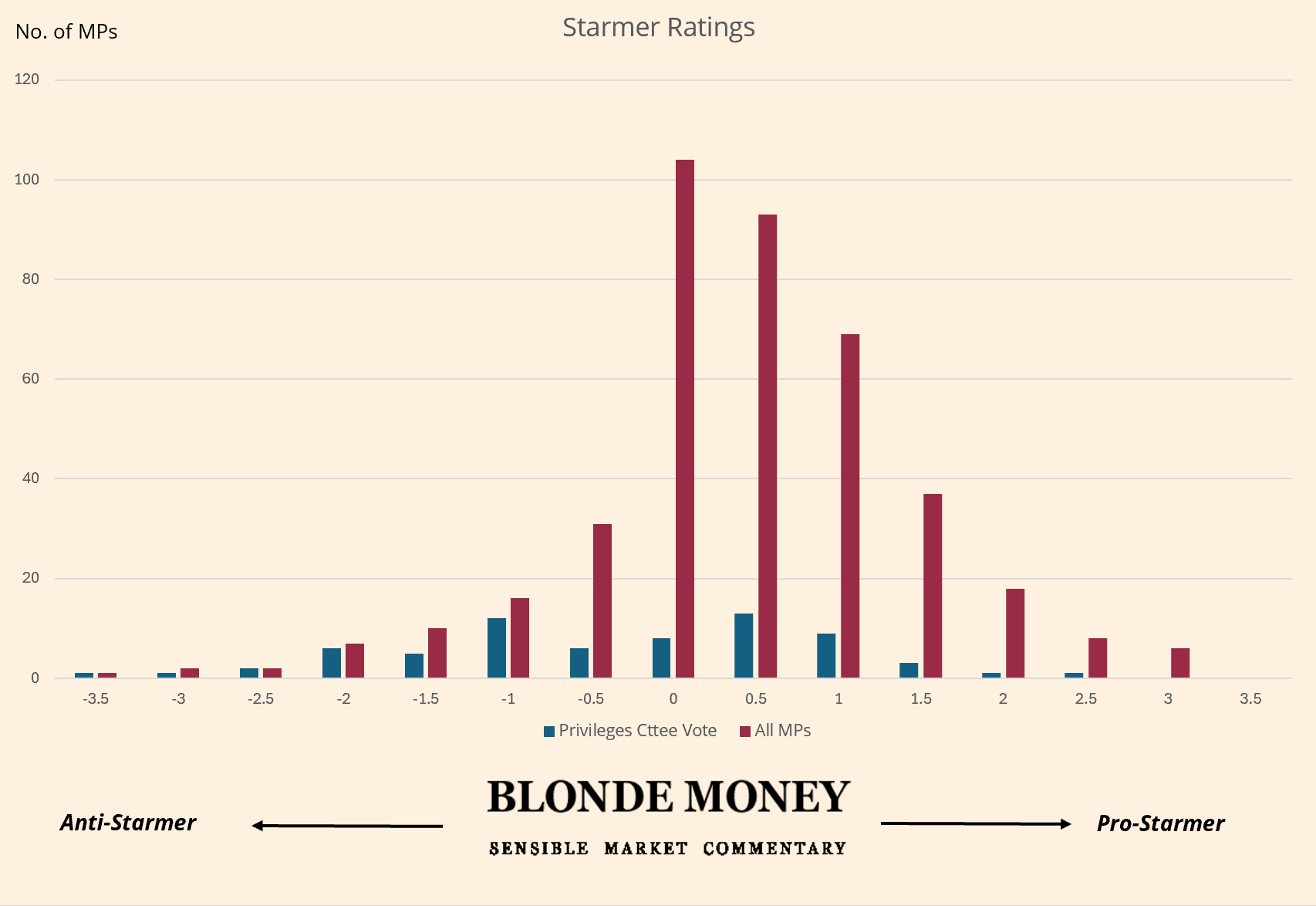
- Whilst there were only 14 rebels voting “Aye” on tonight’s vote to refer the PM to the Privileges Committee (and one active abstention voting both “Aye” and “No”), there were 53 Labour MPs with “No Vote Recorded”.
- Using our Starmer Ratings, we can infer that around 40 of them were active abstentions.

- This gives a total of 55 MPs who rebelled.
- That is a significant rebellion for a Prime Minister who instructed a three-line whip, had public statements of support from former PM Gordon Brown and former cabinet ministers David Blunkett and Alan Johnson, and took place nine days ahead of local elections.
- Government sources had been briefing a “handful” of rebels, and “around 20 could abstain”.
- Today’s vote does not remove the risk of future attempts to refer the Prime Minister to the Privileges Committee.
- Tonight the Intelligence and Security Committee have issued a statement that they have determined what redactions are required for documents to be released under the terms of the Humble Address, which means we should expect to see them quite soon after parliament returns on 13th May.
- Morgan McSweeney told the Foreign Affairs Committee today that texts between him and Mandelson on the day of the September 2025 cabinet reshuffle would be part of the Humble Address release, giving continued oxygen to the story.
- And not just the story of pressure, or vetting, but of Mandelson’s role within the Starmer/McSweeney government.
- The more answers that are given, the more questions that are raised about Starmer’s personal judgement.
- A snap YouGov poll showed 61% of people think the PM should face an inquiry over whether he misled parliament on the vetting process over Mandelson.
- But more significantly Labour voters split 49% to 34% in favour.
- A snap YouGov poll showed 61% of people think the PM should face an inquiry over whether he misled parliament on the vetting process over Mandelson.

- Labour MPs are about to find out the cost of loyalty to a weak leader in the face of a disgruntled electorate.
- Starmer can reshuffle his cabinet and force his MPs to put up or shut up but the longer he remains in the post, the more the entire row will damage the Labour Party.
- All of which leaves the UK with a weak and unstable government just as government bonds reprice in the face of higher inflation and increased defence requirements.